
The photos and videos that win you local jobs
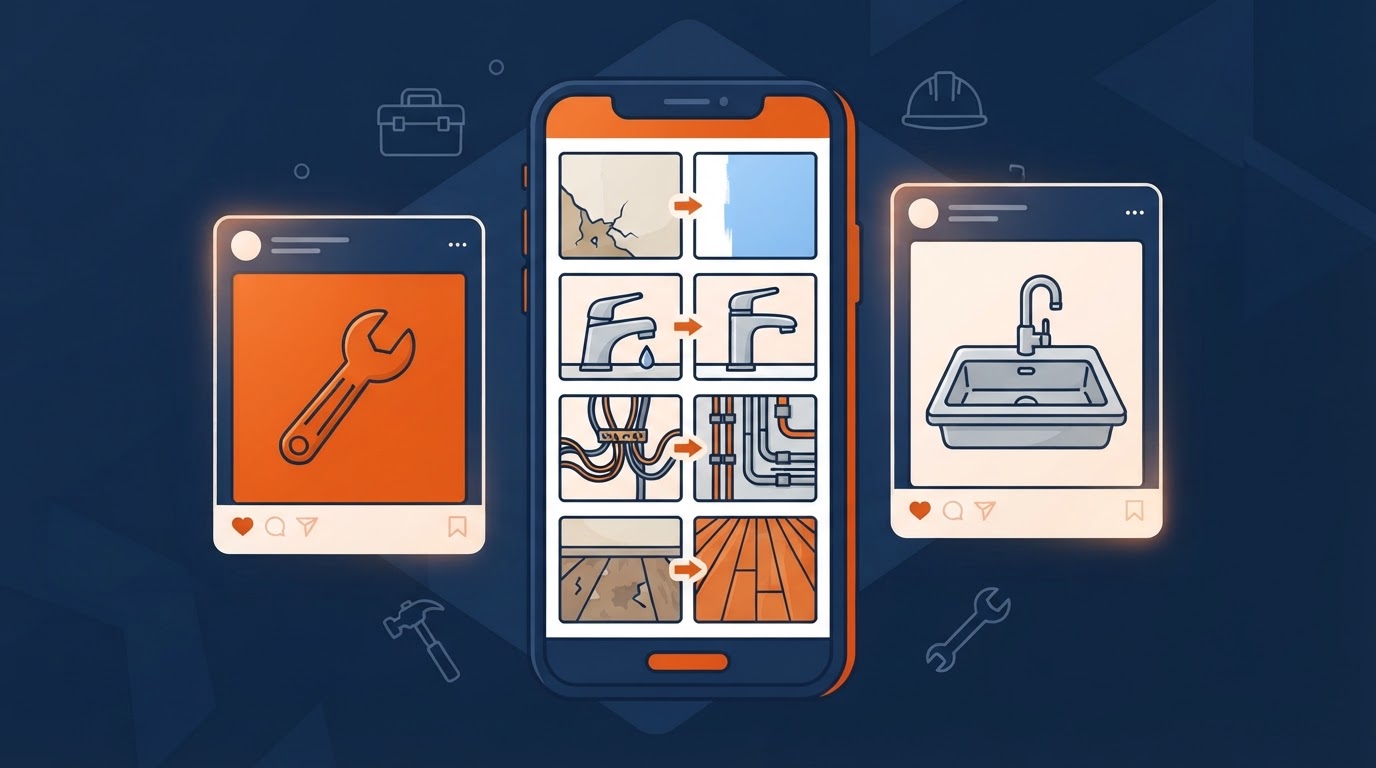
When a homeowner is deciding which HVAC company, plumber, or appliance tech to call, they do something most owners never think about: they look at your photos. Not your logo. Not your slogan. Your photos. If the last photo on your Google listing or Facebook page is from six months ago, a lot of them quietly move on to the next guy. The good news is that the kind of photos and videos that win jobs are not hard to take. You're already on the job. Here's what to capture, what to leave out, and why doing it often matters more than doing it perfectly.
Why a few real photos beat a polished stock image
Stock photos look nice, but homeowners have seen the same shiny van and fake-smiling technician a hundred times. They don't tell anyone you're real. A quick photo of the half-frozen coil you just cleaned, or the leak you found under a sink, does something a stock image can't: it proves you actually do the work. Real photos build trust fast, and trust is what gets a stranger to pick up the phone and call you instead of the next listing.
What to capture
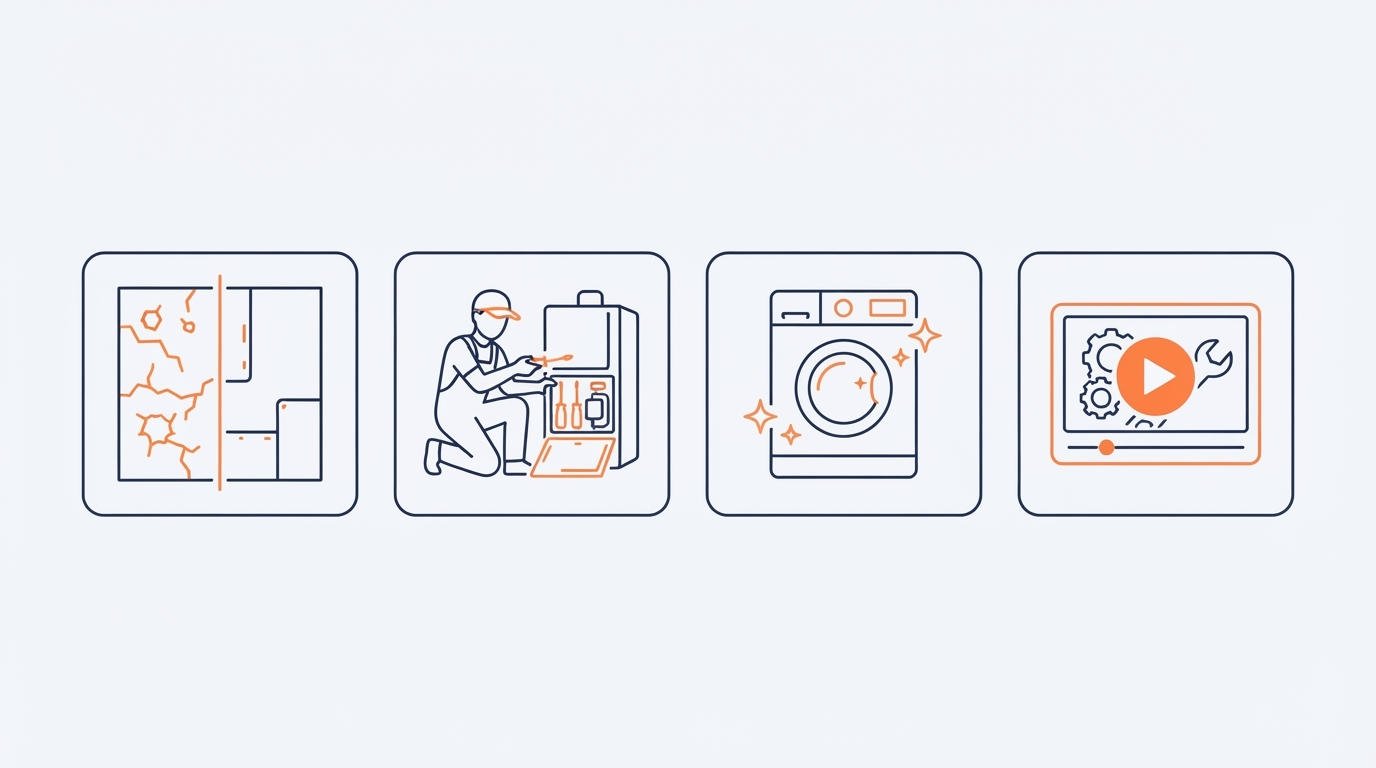
You don't need a camera crew. The phone in your pocket is plenty. Aim to grab these whenever you're on a job that shows your work well:
- Before-and-after shots — the single most powerful image you can post. The contrast tells the whole story in a glance.
- You or your tech at work — a gloved hand tightening a fitting, a wrench on a unit, a ladder up against a house. It shows there's a real person behind the business.
- Finished jobs — a clean install, a replaced water heater, a freshly wired panel. This is the proof a job was done and done well.
- Short clips — a 10-to-20-second video of a fix in progress or the finished result. People watch videos more than they scroll past photos.
The before-and-after shot is your secret weapon
If you only take one kind of photo, make it the before-and-after. A dirty, clogged filter next to the clean one. A scratched-up old door beside the new one. A dark, messy crawlspace and then the same space neat and finished. Homeowners can't judge the quality of your repair work, but they can instantly see that you made something look better. That single image sells the job better than a paragraph of copy ever could.
Make it easy on yourself
Snap the 'before' the moment you walk up to the problem, and the 'after' the second you finish. Two taps, five seconds. You don't have to post them right away — just save them.
Short clips get noticed
A short video doesn't need to be fancy. Point your phone at the unit that wasn't cooling and now is, or walk the camera along a finished fence line. Even a clip of the sound of a furnace kicking on after a repair tells a story. Videos stop the scroll on social and on Google, and Google increasingly favors listings that post them. Fifteen seconds is plenty.

What to leave out: customer faces and addresses
There's one rule to keep in mind before you post anything: don't show a customer's face or their house address without their permission. It seems small, but people care about their privacy, and a complaint can take a post down and ding your reputation. The fix is simple. Frame the shot on the equipment, the wall, the yard — not the person. If a homeowner is in the frame, ask first or keep them out of it. You get all the trust-building of a real photo without any of the risk.
Quick rule of thumb
Shoot the problem and the fix, not the person. If a face or a house number is visible, either ask for permission or step a little to the side and reshoot.
Why consistency matters more than perfection
Here's the part most owners miss. One great photo posted once doesn't do much. A steady trickle of real photos and short clips, week after week, does a lot. Google treats an active Business Profile as a sign you're open, busy, and reliable — and it rewards that activity with better local ranking. Social pages that haven't posted in months make customers wonder if you're still in business. Posting regularly answers that question before they even ask it.

What 'consistent' actually looks like
Consistent doesn't mean every day. It means regular enough that your profile never looks abandoned. For most home service businesses, that's:
- Two to three posts a week across your Google listing, Facebook, and Instagram
- A mix of before-and-afters, finished jobs, and the occasional short clip
- Real photos from real jobs — not the same recycled image over and over
How we help with this
Keeping up with two to three posts a week is exactly the kind of thing that falls off the moment you get busy. Our Growth Package schedules real posts to Facebook, Instagram, and Google for you automatically, so your profile stays active and keeps working for your ranking even when you're buried in jobs.
The bottom line
You're already doing the work that earns trust. The only missing piece is showing it. Real before-and-after photos, the occasional short clip, and a steady rhythm of posts turn the jobs you do every day into proof that wins the next one — and keeps your Google listing climbing. The hard part isn't taking the photos. It's posting them often enough. That's the part we can take off your plate.
Keep reading

Why an AI receptionist beats a real one (and where it works beside one)
An AI receptionist never calls in sick, never takes a lunch break, and never gets rattled by an angry caller. Here's how it stacks up against a human — and where the two work best together.
How to Set Up Call Forwarding on AT&T, Verizon & T-Mobile
A simple, step-by-step guide for non-tech owners to forward customer calls from AT&T, Verizon, T-Mobile, and more straight to your tracking number or 24/7 AI receptionist.

What is a tracking number, and why your AI receptionist needs one
A tracking number is the quiet piece behind the scenes that lets you see where every call comes from and lets your AI receptionist pick up every one. Here's how it works, in plain English.